White Commission
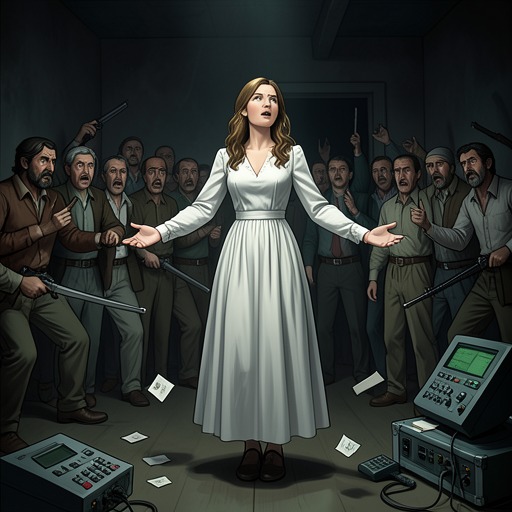
Stephen King Three Classic Novels Box Set: Carrie, 'Salem's Lot, the ShiningThe White Commission is the principal official body charged with investigating the Chamberlain disaster and the events of the Ewen High School Spring Ball. It gives institutional form to the aftermath: a catastrophe that cannot be understood solely as a school prank, a supernatural eruption, or an individual act of violence, because it also involves social ostracism, religious abuse, failed safeguards, delayed information, and the destruction of a community. The Commission’s authority is repeatedly invoked, challenged, and revised by later testimony and published accounts, making it as much a producer of public memory as an investigator of past events.
Mandate and Public Authority
The Commission’s work belongs to the documentary layer of the narrative, alongside investigative reports, newspaper dispatches, testimony, and later books. Susan Snell says that she had previously told her story to the White Commission and that the Commission received it with incredulity. She also describes herself as having been used as a convenient scapegoat. Her account establishes the Commission as an institution that did not merely collect facts: it interpreted testimony, assigned credibility, and helped determine whom the public would blame for the disaster.
That authority is set against the scale of the event it attempted to explain. The later account in The Shadow Exploded describes Carrie White as the victim of her mother’s religious mania and as the possessor of a latent telekinetic talent. The same account argues that telekinesis may emerge only under extreme personal stress, which would explain why earlier manifestations were not recorded. The Commission therefore confronted a case in which conventional evidence was sparse, supernatural capacity was difficult to verify, and the social causes of the crisis were inseparable from its extraordinary physical consequences.
Evidence, Testimony, and Competing Explanations
The Commission’s record is repeatedly treated as an important but incomplete source. It establishes that Christine Hargensen and William Nolan had been meeting above The Cavalier before the Spring Ball and that their plans were connected with the events at the school, although the surviving account leaves uncertain whether those plans were fixed in advance or carried forward on a whim. The Commission is also associated with the theory that Tommy Ross and Christine Hargensen stood at the center of a practical-joker conspiracy designed to bring Carrie White to the Spring Ball and complete her humiliation there. The theory approached a formal conclusion without the Commission actually stating it outright.
This hesitation matters. The practical-joker theory could reduce the disaster to a deliberate plot by several adolescents, but the narrative keeps showing how unstable that explanation is. One account defends Tommy Ross’s character against the image of a shallow athlete who knowingly maneuvered an unstable girl into extreme stress. Another records competing claims about Susan Snell’s role: Susan says she proposed that Tommy take Carrie to make amends for the shower-room incident, while critics argue that this is either romantic distortion or an outright lie. The Commission thus becomes a contested arena in which motives are reconstructed after the fact and adolescent uncertainty is forced into adult categories of conspiracy and responsibility.
The social evidence before the Commission is no less consequential than the supernatural evidence. In questioning about abuse, Henry Grayle confronts John Hargensen with the treatment of Carrie during her first menstrual period: Christine Hargensen and about ten other students threw sanitary napkins at a terrified girl, called her a dumb pudding, told her to “plug it up,” and subjected her to obscene gestures. Carrie then stayed away from school for the week. The exchange places the later catastrophe within an identifiable chain of humiliation and institutional failure, rather than allowing the Commission or the public to treat Carrie’s telekinetic retaliation as an origin without a history.
The Commission and the Disaster’s Causal Chain
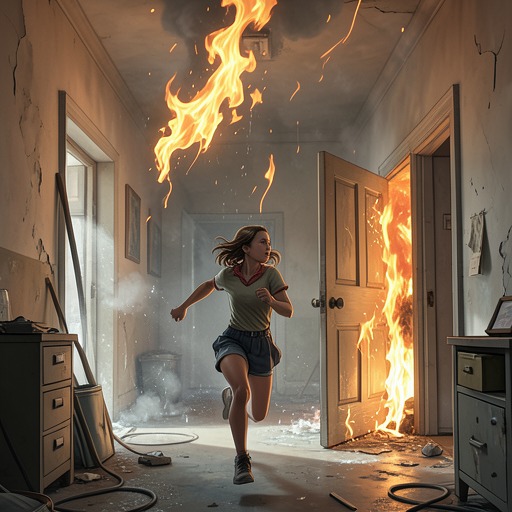
The documentary evidence surrounding the Spring Ball records a rapid breakdown of ordinary protections. A fire raged out of control at Ewen Consolidated High School while the school prom was taking place, and the area’s fire hydrants had been vandalized. Water pressure from the city mains was reported to be inadequate across the area from Spring Street to Grass Plaza. The Commission’s investigation therefore had to account not only for what happened inside the gymnasium but also for the material conditions that allowed fire and panic to spread.
The official record also preserves the delays and interruptions that shaped the response. The sheriff learned that trouble had broken out at Ewen High School through a radio transmission from Officer Jacob Plessy at 10:21. Later, the Jackson Avenue gas main was opened shortly after midnight, and an ambulance attendant from Motton threw out a cigarette butt as the rescue vehicle moved toward Summer Street. The resulting explosion destroyed nearly half a block, including the offices of the Chamberlain Clarion, while the telephone exchange suffered a complete jam of the town’s remaining operating lines. These details widen the Commission’s subject from a single violent scene to a cascading civic disaster in which damaged infrastructure, failed communication, and emergency misjudgment magnified the original destruction.
The record also reveals how much testimony remained partial. One witness could not say how many people were walking down Carlin Street, estimating perhaps thirty or more because of being too upset. Such uncertainty is not incidental to the Commission’s work. It shows the gap between an institution seeking a coherent account and survivors whose perceptions were fractured by fear, smoke, flight, and grief. The official inquiry could arrange times, locations, and statements, but it could not eliminate the trauma that made those statements incomplete.
Findings, Blame, and the Limits of Official Memory
The White Commission’s most important narrative function is to embody the desire to convert catastrophe into a settled explanation. Yet the surrounding accounts repeatedly resist settlement. The Shadow Exploded calls the Commission a source that approached the practical-joker theory without fully asserting it, while My Name Is Susan Snell portrays the Commission as incredulous toward Susan’s testimony and willing to make her a scapegoat. The discrepancy suggests that official investigation can preserve facts while still misrepresenting moral responsibility.
The scale of the aftermath exposes the inadequacy of any explanation that isolates one person or one moment. Four hundred and forty people were reported dead, eighteen remained unaccounted for, and sixty-seven of the dead were Ewen High School seniors on the verge of graduation. The dead were buried in three mass ceremonies on June 1 and 2, followed by a memorial service in the town square on June 3 attended by thousands. The school band, reduced from fifty-six members to forty, played the school song and taps. These public rituals transformed the Commission’s findings into part of a civic struggle over how the dead would be named and how the living would understand their loss.
The Commission’s account also competes with the physical landscape left behind. The Congregational Church on Carlin Street was gone, the Catholic Church on Elm Street remained standing, and the Methodist Church on outer Main Street was singed but unhurt; nevertheless, attendance was poor. Houses carried black wreaths, many bore For Sale signs, and the town was described as waiting to die. The disaster’s consequences therefore exceeded the deaths counted in an official report. Chamberlain’s institutions, routines, population, and confidence had all been altered, and no administrative conclusion could restore the town to its former condition.
Legacy and Narrative Significance
The White Commission is significant because it stands between event and memory. It preserves the language of inquiry, the chronology of emergency response, and the competing theories surrounding Tommy Ross, Susan Snell, Christine Hargensen, and Carrie White. At the same time, its skepticism and scapegoating demonstrate how official narratives can narrow a collective catastrophe into a manageable story of individual fault.
Later testimony continues to push against that narrowing. Susan insists that the fundamental fact is that the participants were children, repeating that claim while acknowledging the deaths of two hundred people and the destruction of an entire town. The wider record gives the loss an even greater scale: four hundred and forty dead, eighteen missing, and a community whose funerals continued as more bodies were found. The White Commission can document the disaster, but it cannot make the grief orderly or make responsibility singular.
Its enduring role is therefore double. As an investigative organization, it seeks evidence, explanations, and accountability. As a narrative institution, it helps shape what later readers believe happened, who should be blamed, and which uncertainties may be forgotten. The novel’s inclusion of later books, news reports, testimony, and Susan Snell’s exhausted hope of leaving for somewhere no one knows her keeps that process open. The Commission’s report is part of the history of Chamberlain, but it is not the final word on the catastrophe or on the people who lived through it.